
Living barefoot as much as possible may seem uncomfortable to some, but not to a sensory divergent person. Not all sensory divergent people are the same—just like neurotypical people—so even within the same community, some might decline the opportunity. However, the opposite is quite common: wearing shoes as little as possible, always and everywhere.
Barefooting for a sensory divergent person
Barefooting is one of the most intense and nonconformist tactile experiences. When you go barefoot, you are in constant contact with everything around you. The sensation can be pleasant, unpleasant, new, or familiar. Every surface is different, even depending on the temperature, and every sensation is perceived differently based on your mood. The constant presence of shoes, which block out every sensation, can instead cause anxiety, stress, nervousness, and a feeling of clumsiness.
Barefooting helps you live in the present, regulate your emotions, and reduce brain fog by reconnecting you with your body’s sensations.
Choosing to go barefoot to meet your needs also means breaking a well-established neurotypical social rule: “You must wear shoes.” But for someone with sensory hypersensitivity, shoes are a useful tool—not a necessity.
Imagine living with welding gloves every day
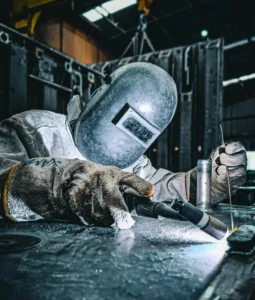
Imagine carrying out all your daily activities while wearing a pair of thick welding gloves in a world where it’s the social norm to wear them as much as possible. You find them unnecessary, but you have to wear them to avoid being perceived as weird.
So, from paying for groceries at the store to using your smartphone or cleaning your glasses, you have to do everything with those gloves on. They’re incredibly uncomfortable, and you could easily perform these ordinary tasks without them. But social norms dictate that you must wear them. So, on top of your usual daily struggles—work, health, bills, relationships—your mind is constantly distracted by how annoying it is to wear them, mixed with the frustration of not being able to simply take them off because “you’d look weird”.
Breaking a taboo
Not wearing shoes is one of the biggest taboos in many urban environments. Footwear has become an obsession—the first thing people notice when looking at someone. It’s frustrating to realise how quickly people glance at others’ feet just to comment on what they’re wearing (or not wearing). Sometimes, it’s not just the lack of footwear that sparks unnecessary remarks, but also unconventional choices like minimal or zero-drop shoes.
Fortunately, there are also many people who have more important things to think about and don’t even notice—or who ask out of harmless curiosity because they didn’t know it was possible.
The psychological power of barefooting
If you’re someone who considers shoes optional in most situations, breaking the “always wear shoes” rule can be incredibly empowering. Across Europe, there are many associations that promote barefooting. It requires practice and caution, but it’s a real and incredibly rewarding tactile and psychological experience.